【深基16.例3】二叉树深度
题目描述
有一个 n(n≤106) 个结点的二叉树。给出每个结点的两个子结点编号(均不超过 n),建立一棵二叉树(根节点的编号为 1),如果是叶子结点,则输入 0 0。
建好这棵二叉树之后,请求出它的深度。二叉树的深度是指从根节点到叶子结点时,最多经过了几层。
输入格式
第一行一个整数 n,表示结点数。
之后 n 行,第 i 行两个整数 l、r,分别表示结点 i 的左右子结点编号。若 l=0 则表示无左子结点,r=0 同理。
输出格式
一个整数,表示最大结点深度。
样例 #1
样例输入 #1
1
2
3
4
5
6
7
8
| 7
2 7
3 6
4 5
0 0
0 0
0 0
0 0
|
样例输出 #1
本蒟蒻的小记
这道题的步骤划分为两个:
第一步:根据要求建树,对于这种1-7元素都有的这种树,除了传统的顺序存储,和传统的链式存储,还可以用数组顺序存储链式存储混合存储(即数组中的每个元素都是一个结构体,都有leftchild和rightchild的下标,通过下表实现“指向”的概念)
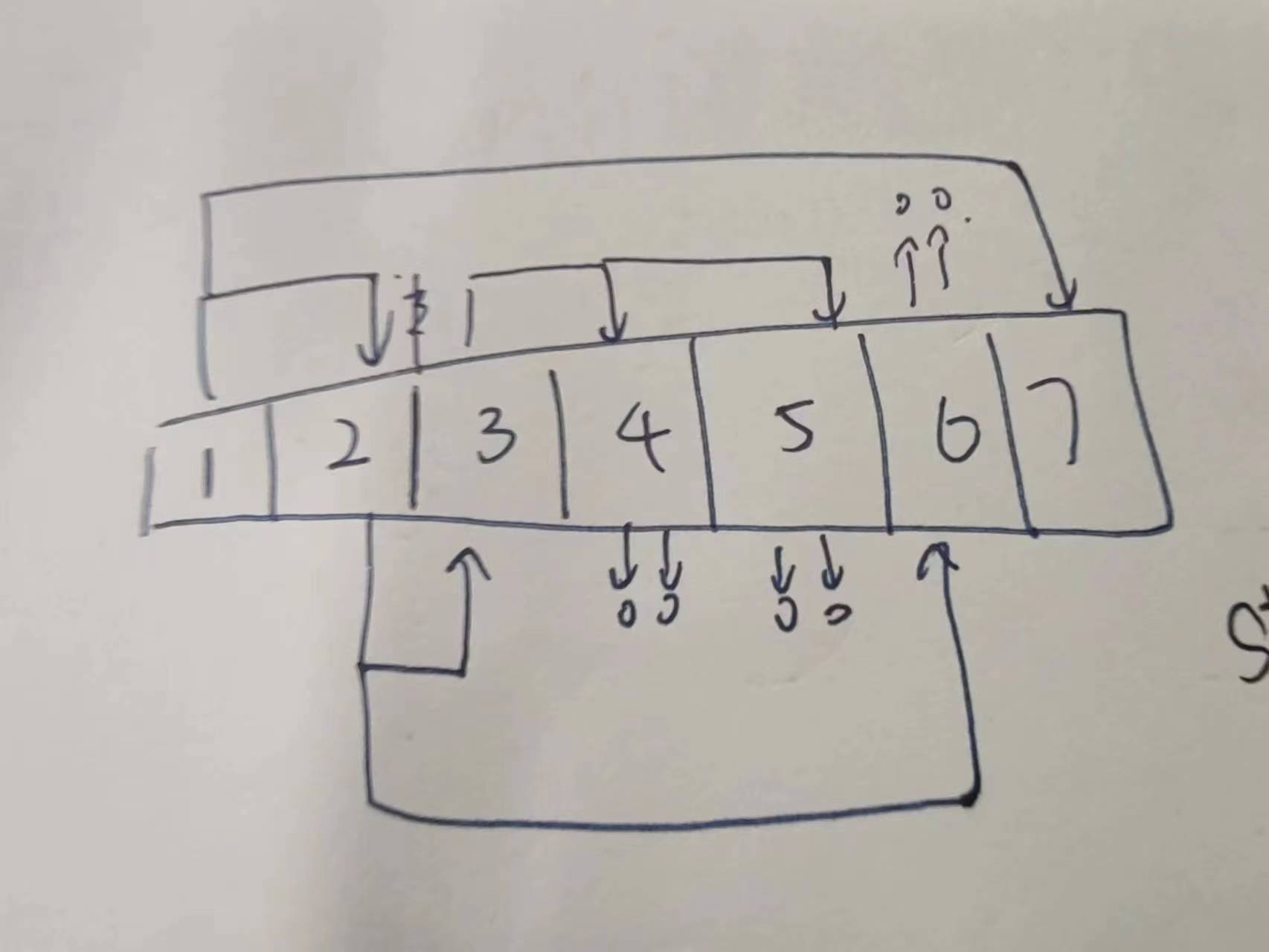
第二步:广度优先搜索算法:这个比较简单直接看代码
1
2
3
4
5
6
7
8
9
10
11
12
13
14
15
16
17
18
19
20
21
22
23
24
25
26
27
28
29
30
31
32
33
34
35
36
37
38
39
40
41
42
43
44
45
46
47
48
49
50
51
52
53
54
55
| #include<iostream>
#include<cstdlib>
#include<string>
#include<queue>
#define max_size 1000005
using namespace std;
typedef struct bit{
long long depth=1;
long long number;
long long lchild;
long long rchild;
}bitree;
bitree bi[max_size];
queue<bitree> q;
long long bfs()
{
q.push(bi[1]);
long long max=0;
while(!q.empty())
{
if(q.front().lchild!=-1)
{
bi[q.front().lchild].depth =q.front().depth+1;
q.push(bi[q.front().lchild]);
}
if(q.front().rchild!=-1)
{
bi[q.front().rchild].depth =q.front().depth+1;
q.push(bi[q.front().rchild]);
}
if(q.front().lchild==-1 && q.front().rchild==-1 && q.front().depth>max)
{
max=q.front().depth;
}
q.pop();
}
return max;
}
int main()
{
long long n,lch,rch,ans;
cin>>n;
for(int i=1;i<=n;i++)
{
cin>>lch>>rch;
bi[i].number =i;
bi[i].lchild =lch==0?-1:lch;
bi[i].rchild =rch==0?-1:rch;
}
ans=bfs();
cout<<ans<<endl;
return 0;
}
|
完结撒花
Harbin Institute of Technology, Shenzhen 计算机科学与技术 本科在读